
Posted by
Ms. Faymoreen Smith
Manager, Special Collections
As Jamaica rapidly approaches its 64th Independence celebration this August, our national conversation naturally turns to the monumental milestones of August 6, 1962. We rightfully honor the political giants, the fiery constitutional debates, and the historic moment the black, green, and gold replaced the Union Jack.
Yet, macro-histories often obscure a fundamental truth: a nation is not merely birthed by political decrees. It is woven together over generations by the daily lives, domestic rhythms, and community architectures of its people.
To truly understand the social fabric that underpins modern Jamaica, we must peer through a more intimate lens. Tucked away within the newly processed Montpelier Collection (Manuscript # MS 2327), housed in the Special Collections Branch at the National Library of Jamaica, lies an extraordinary window into the decades leading up to 1962. This archive shifts our focus away from the old, rigid plantation economics of colonial St. James and firmly onto the vibrant, everyday human landscape of the elite families who shaped the parish’s mid-twentieth-century reality.
Inside the Vault: The Anatomy of MS 2327
Spanning from 1850 to 1983, this rich, comprehensive archive provides an unprecedented look into the socio-educational, domestic, athletic, and financial lives of Jamaican families navigating a changing century.
For researchers and historians, the collection is meticulously organized into nine distinct series:
- Correspondence: Global and local personal/professional networks.
- Personal Papers: Diaries, school records, and intimate family records.
- Photographs: Visual histories of St. James’ changing landscape and people.
- Awards: National and colonial honors representing civic excellence.
- Printed Materials: Historic community programs, flyers, and pamphlets.
- Cartographic Records: Maps detailing the physical shifting of estate lands.
- Objects: Material culture and physical artifacts of the era.
- Administrative Records: Logistics of mid-century local organizing.
- Legal and Financial Documents: Mortgages, land deeds, and corporate ledgers.
The Financial and Domestic Heartbeat: Annie Geraldine Roper
Too often, historic records prioritize corporate ledger books while ignoring the vital community infrastructure managed by women. The papers of matriarch Annie Geraldine Roper challenge this archival oversight. Her professional correspondence reveals a woman deeply embedded in the financial stewardship of Montego Bay. Working alongside local legal advisors, Annie managed complex mortgage securities, private lending systems, and land transfers that physically shaped modern neighborhoods like Humber Avenue and Brandon Hill.
But a society is built on more than contracts; it is built on culture.
The Montpelier Collection safeguards Annie’s personal exercise books containing dozens of handwritten recipes—ranging from traditional Ginger Beer and Christmas Fruit Cake to Canary Pudding.
To read these pages is to step directly into a pre-Independence Jamaican kitchen. It captures the exact sensory details of local hospitality, domestic resourcefulness, and family gatherings that bound the community of St. James together. Furthermore, her extensive global network of postcards and airmails—including poignant wartime correspondence from naval officers aboard the H.M.S. Letitia in 1940—proves that even from rural Jamaica, local family networks pulsed with global vitality.
The Evolution of Leadership: From Colonial Classrooms to Civic Honors
The collection also traces the fascinating evolution of local identity through the upbringing of the Burke brothers. The archive preserves the 1921 Jamaica College report cards for a young Basil Constantine Burke and his brother Edward Lawrence Constantine Burke, alongside older University of Cambridge Preliminary Local Examination certificates from the family lineage. These documents illustrate the strict colonial educational apparatus designed to mold young minds.
Yet, the collection beautifully captures how this generation took those rigid foundations and repurposed them to build an independent, self-assured civic sphere.
Major Basil Constantine Burke (MBE) emerged as a central pillar of Jamaica’s mid-century athletic identity. As a leader and international referee for the All Jamaica Polo Association and the Montego Bay Polo Club, Basil helped pioneer an era where Jamaican sportsmanship stood proudly on the global stage, organizing historic international tournaments against nations like Costa Rica.
Major Basil’s lifelong devotion to regional development and national service eventually earned him an appointment to the Most Excellent Order of the British Empire (MBE). The collection contains a treasure trove of urgent telegrams and heartfelt congratulatory letters celebrating his addition to the Queen’s Birthday Honours List. These letters represent more than personal pride; they record a community collectively celebrating the elevation of one of their own as Jamaica stood on the very precipice of self-determination.
Why "Everyday" Archives Matter for Emancipendence 64
When we look at the family photographs, the community event programs, and the legal documents detailing the subdivision of old estate lands into modern holdings, we see a society actively outgrowing its colonial shell. The Burke and Roper papers preserve the vital missing links of our national story: the transition of St. James from an old sugar-and-cattle frontier into a thriving hub of modern civic leadership, athletic excellence, military duty, and a distinct cultural identity.
As we raise the black, green, and gold this August for our 64th Independence milestone, let us remember that our history lives vividly in the handwritten notes, the family albums, and the heirloom recipes of our ancestors. The Montpelier Collection (MS 2327) serves as an urgent reminder that to truly celebrate where Jamaica is going, we must preserve the intimate, everyday records of the people who laid the bricks to get us here.
Samples From The collection
Recipes
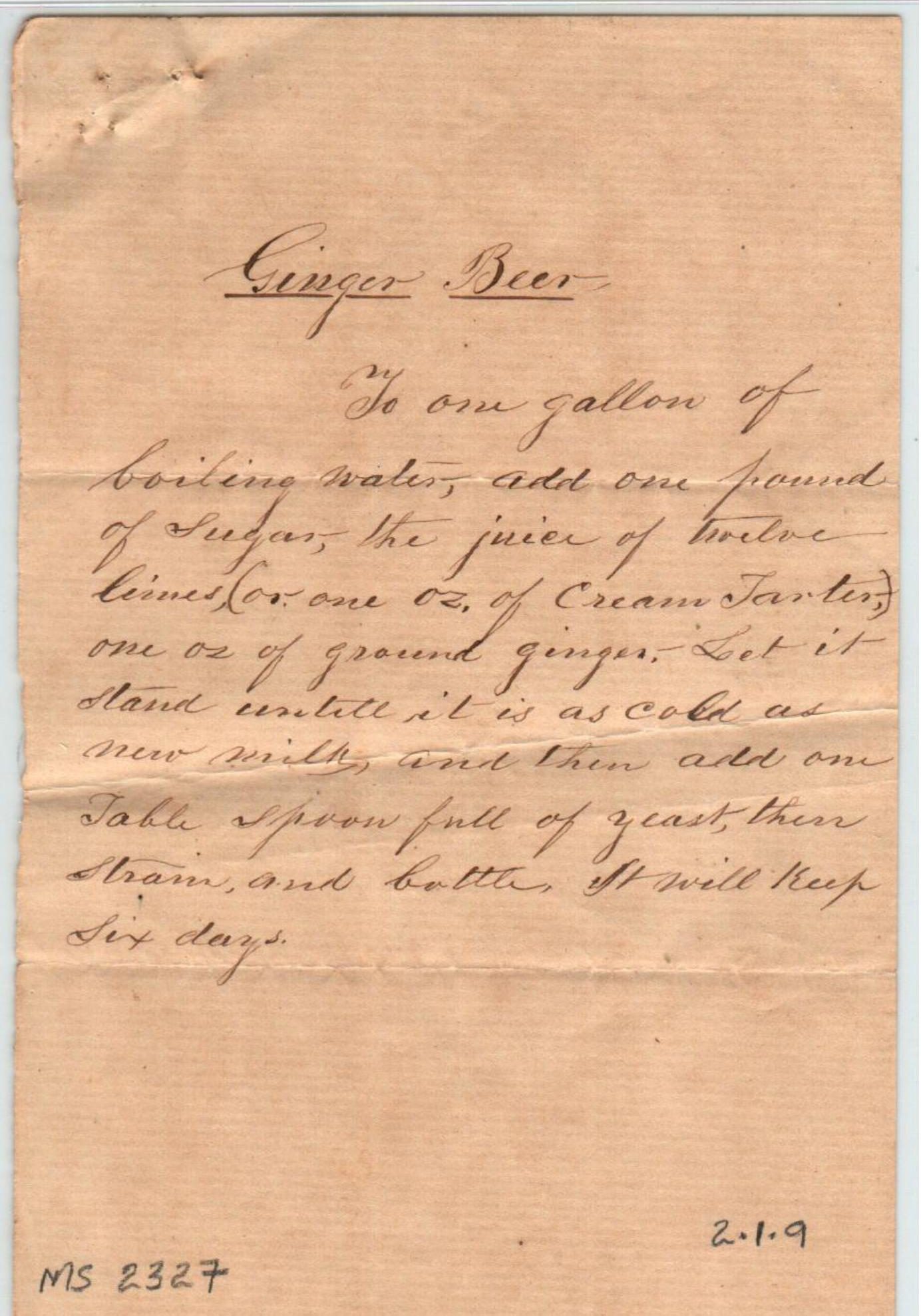
Ginger Beer
2.1.9
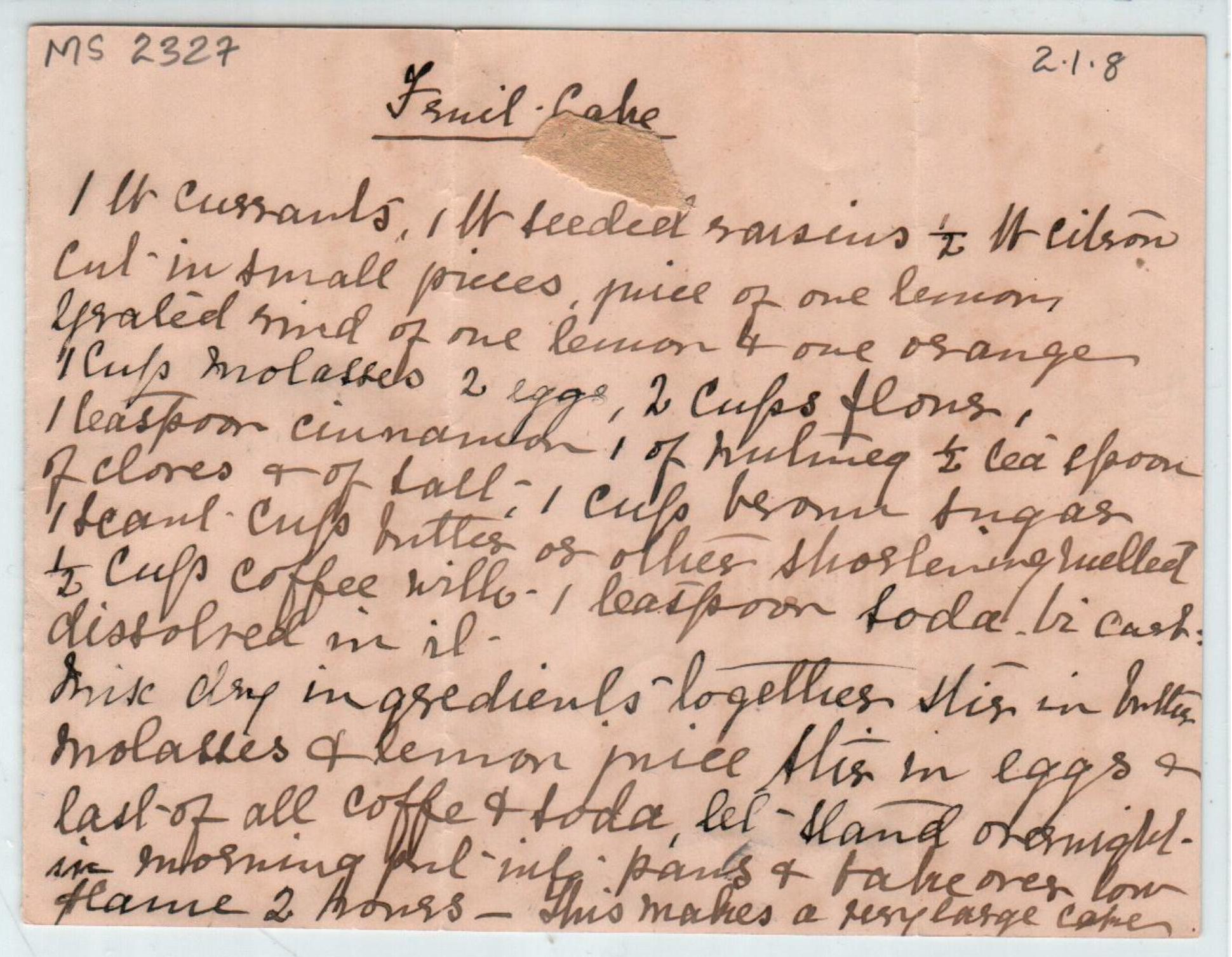
Fruit Cake
2.1.8
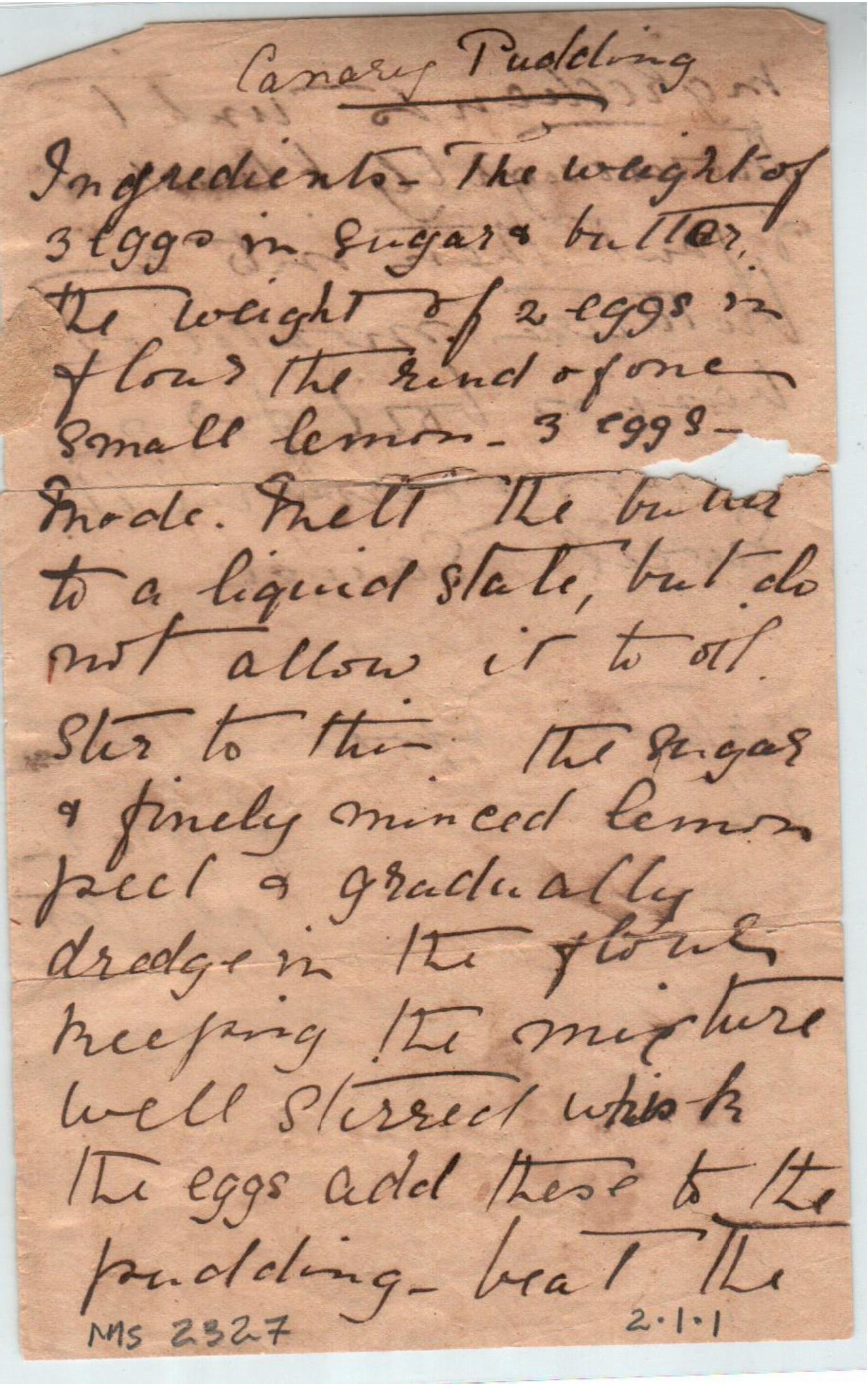
Canary Pudding
2.1.1
Post Cards
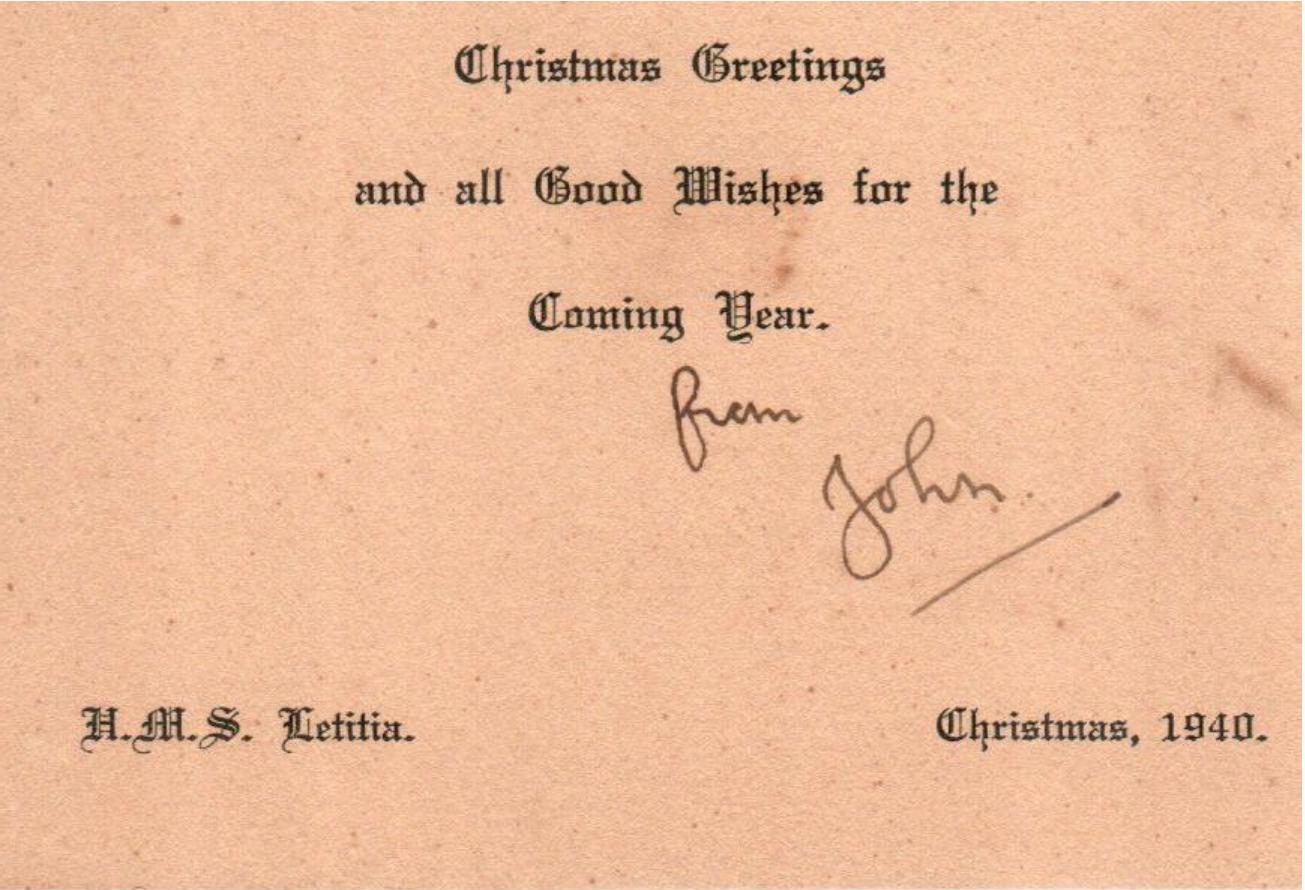
Embossed postcard that features picture of crown at the front, and states “Christmas Greetings and all good wishes for the coming year” with the initial H.M.S Letitia. Christmas 1940
2.2.10
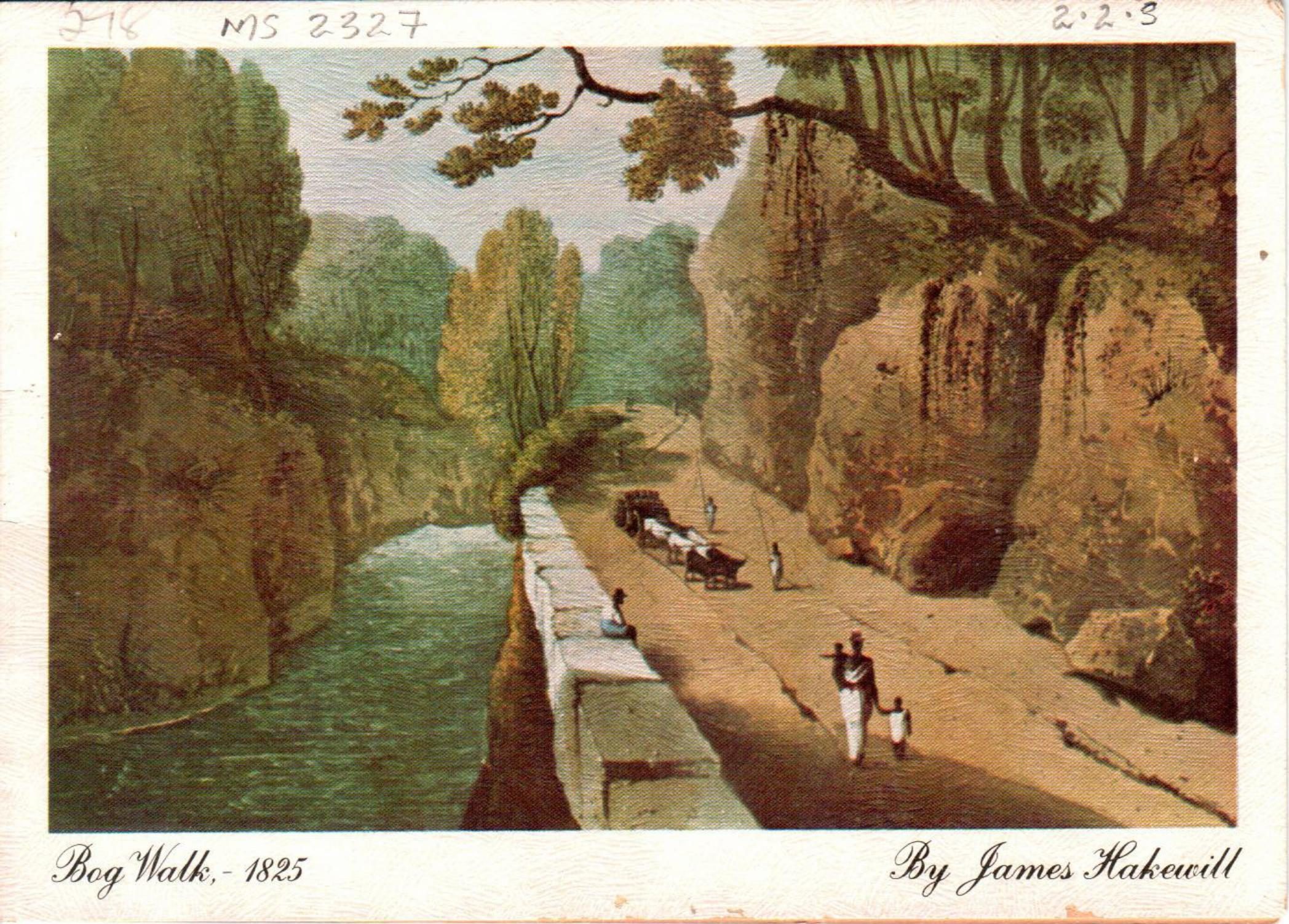
Postcard that features drawing of Bog Walk by James Haewillm, 1825 . Inside writes “With all good wishes for Christmas and the New Year”
2.2.3
Certificates
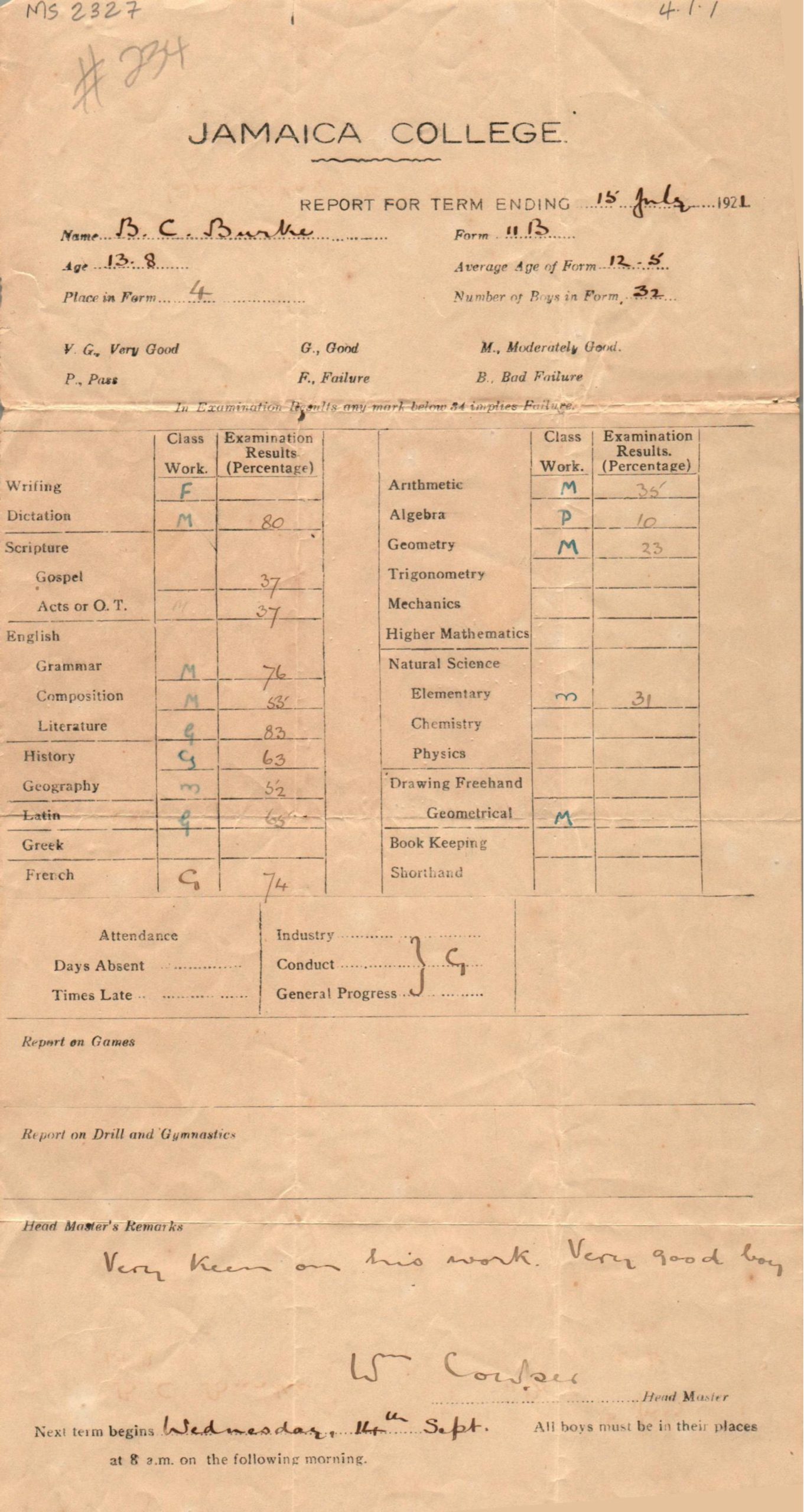
Report for term ending July 15, 1921 for Basil Constantine Burke age 13.8
4.1.1
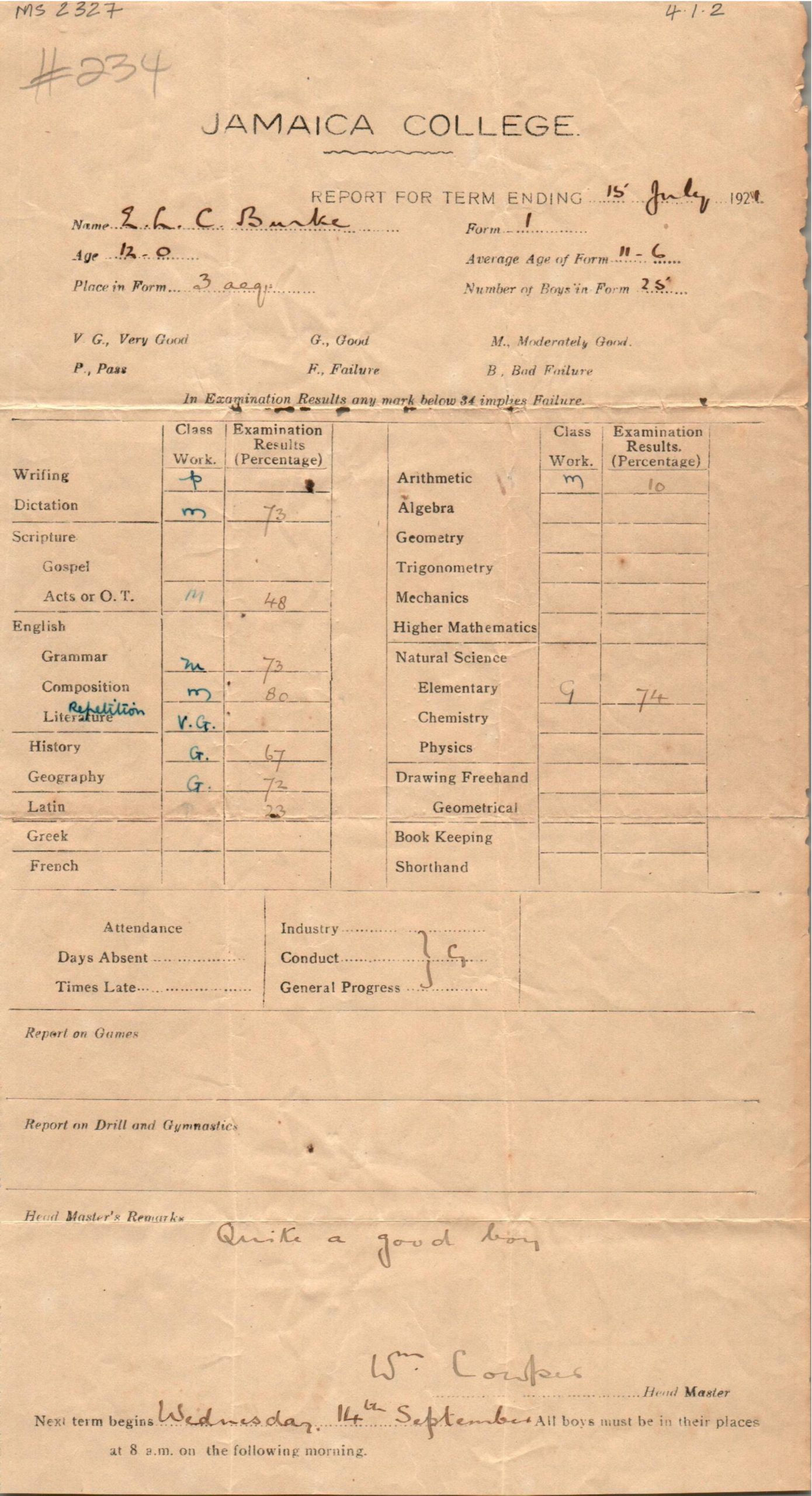
Report for term ending July 15, 1921 for Edward Lawrence Constantine Burke age 12.0
4.1.2
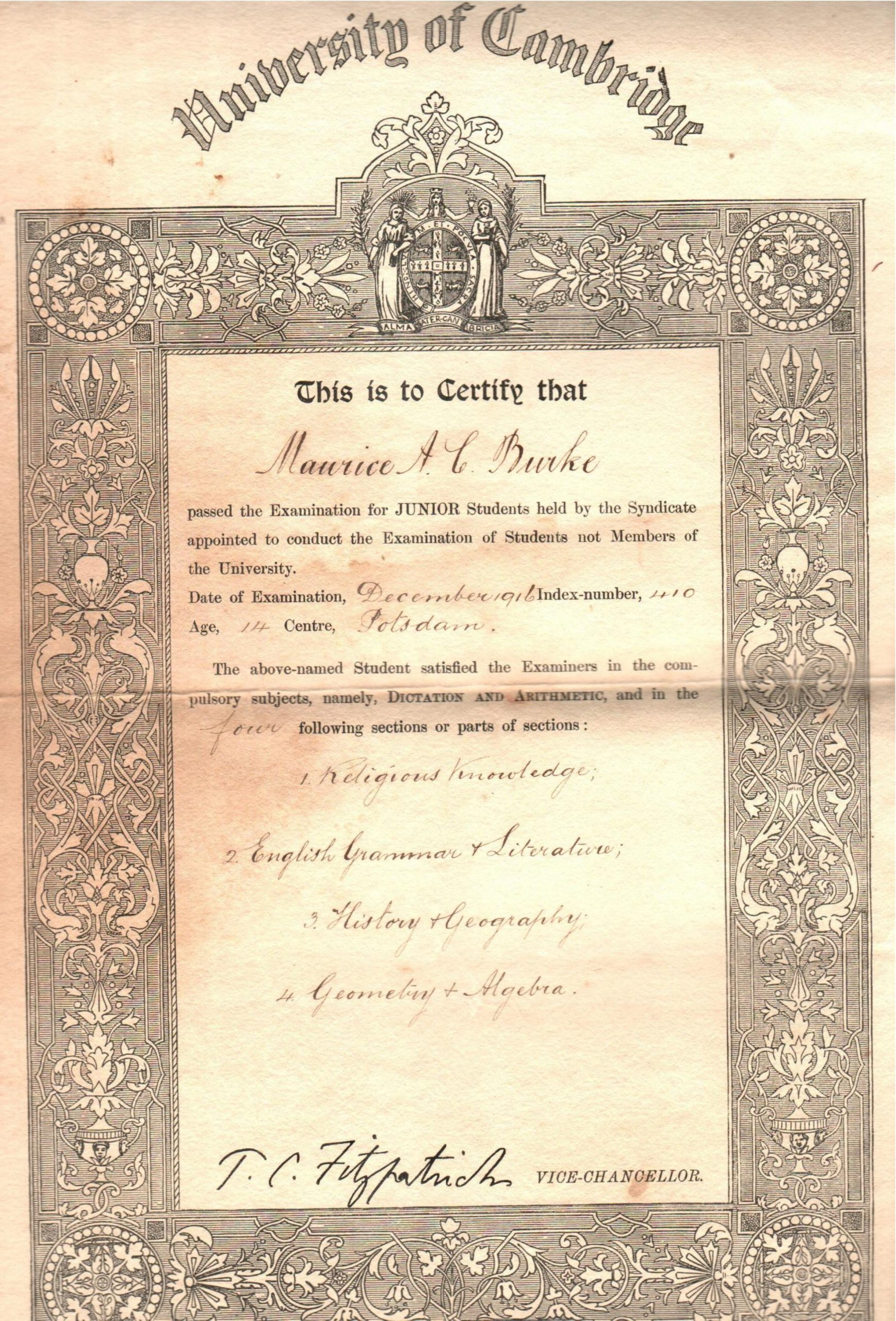
University of Cambridge Preliminary Local Examination certifies Maurice A.G Burke index #410 age 14, centre at Potsdam passed examination for JUNIOR student; Religious Knowledge, English (Grammar & Literature), History &, Geography, Geometry & Algebra. 1916/12
4.1.5
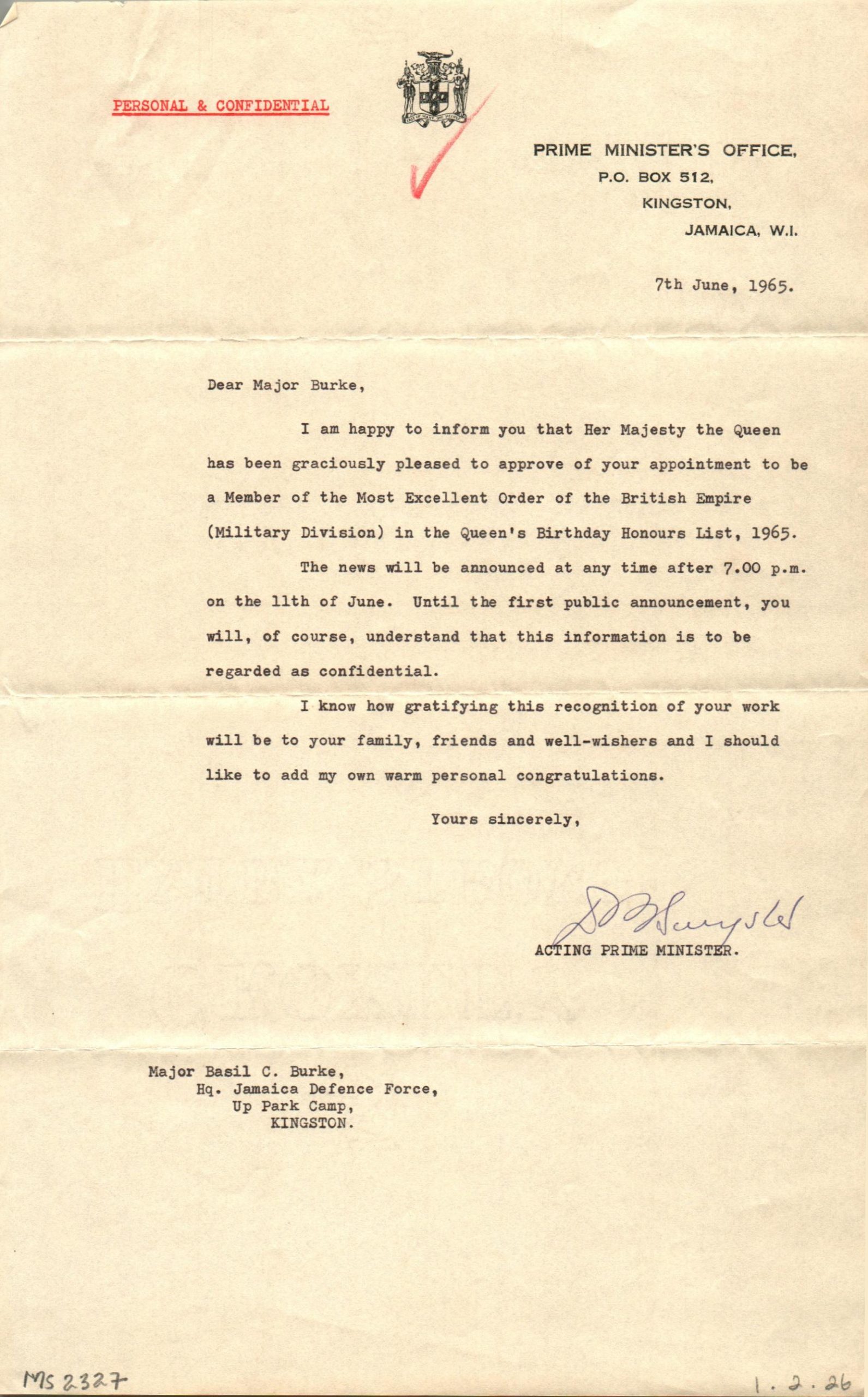
Congratulatory letter from Donald Sangsters (Acting Prime Minister of Jamaica) to Basil Burke for MBE Queen’s Birthday Honours List. 1965/06/07
1.2.26
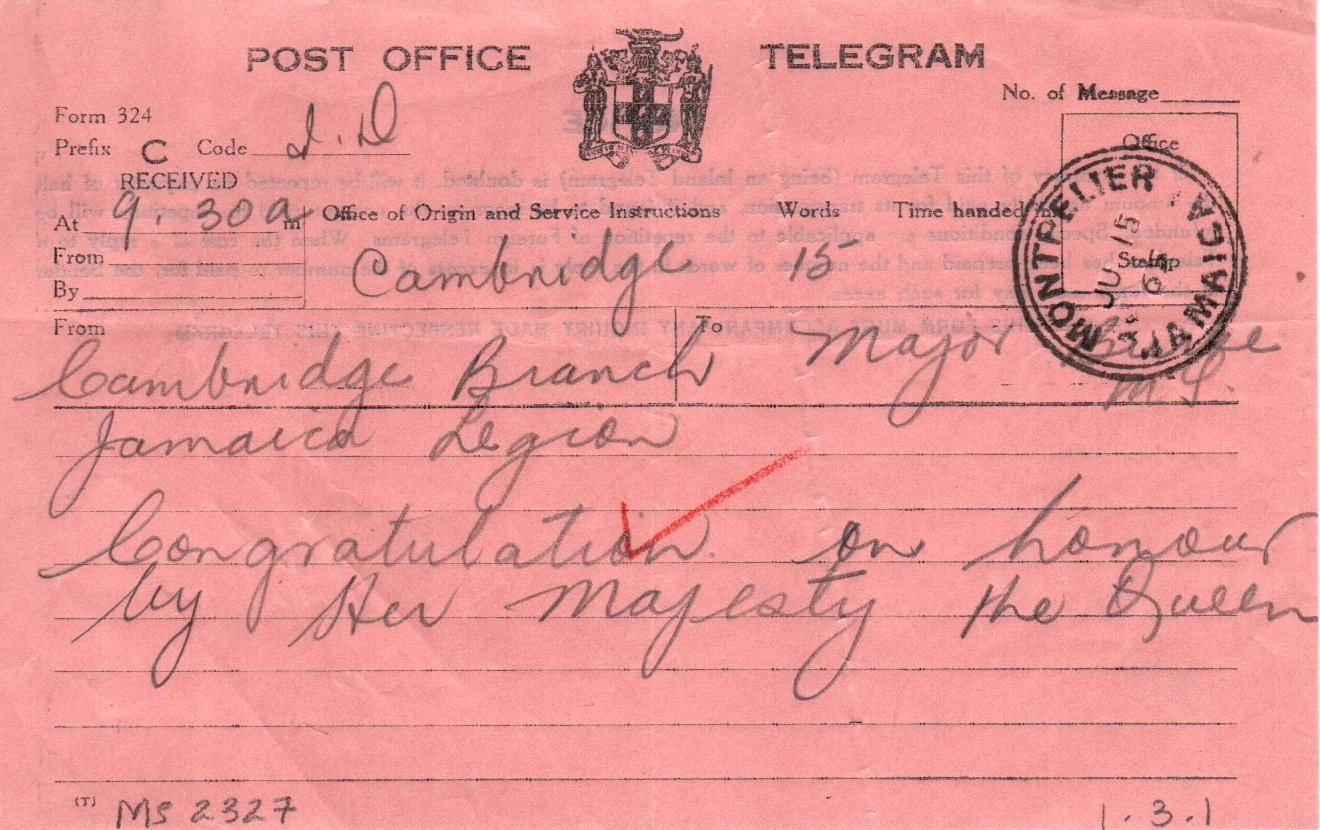
Telegram from Cambridge Branch to Basil Burke “Congratulations on honour by Her Majesty the Queen” 1965/07/15
1.3.1
Special Collections Branch
National Library of Jamaica
For research inquiries, viewing requests, or archival features regarding the Montpelier Collection (MS 2327), please contact the NLJ directly.